7 Best Wooden Kitchen Table Sets for Small Spaces?
Choosing furniture for a small kitchen can feel surprisingly difficult. A table may look compact online, yet feel bulky once chairs, walkways, and cabinet doors enter the room. This guide examines seven practical wooden kitchen table sets for apartments, breakfast corners, and narrow dining areas.
A reliable Wooden Kitchen Table Set should balance size, comfort, durability, and visual warmth. Measure the available floor space first, including chair movement and walking clearance. Solid wood often offers better longevity, but engineered wood can reduce weight and cost. Inspect the joints, finish, tabletop thickness, and chair stability before purchasing. These details matter every day.
William Morris, the influential British designer and furniture maker, advised, “Have nothing in your houses that you do not know to be useful, or believe to be beautiful.” That principle fits small kitchens especially well. Each set featured here must earn its space through useful seating, sensible proportions, or adaptable design. Some options may appear ideal, but no set is perfect for every room. A glossy finish can show fingerprints. A compact chair can feel uncomfortable after a long meal. These are easy details to overlook.
Expect comparisons based on real-world practicality, not photographs alone. We consider assembly, cleaning, wood appearance, stability, and long-term value. The best choice may not be the largest or cheapest set. It may be the one that leaves enough room to breathe.
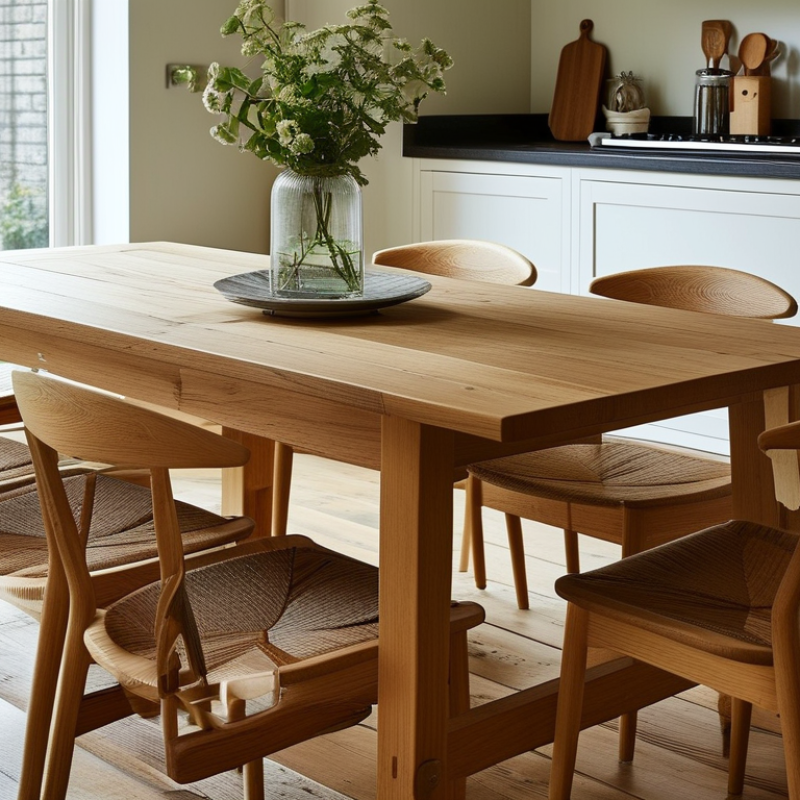
Key Features of Wooden Kitchen Table Sets for Small Spaces
Key Features of Wooden Kitchen Table Sets for Small Spaces
A compact wooden kitchen table set should earn every inch it occupies. The 2024 Houzz U.S. Kitchen Trends Study reports that 76% of renovating homeowners add or upgrade an island. In a small kitchen, however, a full island may block movement. A narrow rectangular table, folding leaf, or drop-leaf design can provide dining space without creating a traffic bottleneck.
Measure the walkway carefully. About 36 inches around the table usually feels more usable, though real homes are rarely perfect.
Material choice matters. Solid wood offers repairability and a warmer tactile experience, while engineered wood can reduce weight and cost. Look for a stable frame, sealed surfaces, rounded corners, and moisture-resistant finishes.
The Environmental Protection Agency notes that indoor pollutant levels can be two to five times higher than outdoor levels, so low-emitting finishes are a sensible feature. Certification claims should be verified, not simply trusted.
Seating should slide fully under the tabletop. That small detail can make a room feel surprisingly larger. Armless chairs, benches, and nesting stools improve flexibility, but comfort still matters.
The National Kitchen & Bath Association’s 2024 Kitchen Trends Report continues to emphasize multifunctional kitchen planning, supporting furniture that serves dining, preparation, and occasional work.
I would avoid choosing a set only by appearance. Dark wood may show dust, and glossy finishes can reveal every fingerprint. Test the chair height, inspect the joints, and remember that “space-saving” furniture can still feel cramped.
How to Choose the Right Size, Shape, and Seating Capacity
Choosing among seven wooden kitchen table sets starts with real household habits, not catalog styling. The U.S. Census Bureau’s 2023 American Community Survey reports an average household size of about 2.6 people. That makes a compact two-seat square or 36-inch round table practical for many homes. A 42-inch round table can seat four comfortably, while a 48-by-30-inch rectangular table suits four without overwhelming a narrow kitchen. Measure the room with chairs pulled out. Empty-floor measurements can mislead.
Shape controls movement. Round tops soften tight corners and remove sharp edges, but they need central clearance. Rectangular tables use walls efficiently and support occasional guests. Drop-leaf and extendable designs offer useful flexibility, though their hinges and leaves deserve careful inspection. The National Kitchen & Bath Association recommends about 24 inches of table edge per diner and at least 36 inches behind a seated person for passage. A 60-inch table may technically seat six, yet six adults can feel crowded during meals. Benches save width on one side, but they are less comfortable for long dinners. Counter-height sets may improve posture for some users, although older adults and children may find them awkward. I would measure twice, then leave one extra inch. Real kitchens rarely behave like floor plans.
Seven Space-Saving Wooden Kitchen Table Set Styles
7 Best Wooden Kitchen Table Sets for Small Spaces?
Seven Space-Saving Wooden Kitchen Table Set Styles
In a compact kitchen, the right wooden table set must work around daily movement. Measure the walkway before choosing furniture. About 36 inches of clearance usually feels more comfortable, though every room differs.
A drop-leaf set folds its sides down after breakfast, leaving a narrow console-like surface. A gateleg table offers similar flexibility, with hinged supports that tuck beneath the top. Nesting tables provide separate pieces for meals, homework, or serving, then slide together neatly. A round pedestal set removes sharp corners and allows chairs to move more easily. It can feel surprisingly open.
A bench-style set stores beneath the table and uses fewer chair backs. An extendable table serves two people daily, then opens for guests when needed. A wall-mounted folding table saves the most floor space, but it needs secure installation and a strong wall surface. That detail is easy to overlook. Finally, consider a slim counter-height set with stools; the vertical design can add storage underneath, although some people may find taller seating less comfortable.
Look for kiln-dried wood, tight joints, smooth edges, and a finish that handles spills. Sit on the chairs before buying if possible. I once underestimated seat depth, and the set looked perfect but felt awkward after ten minutes. Small rooms reward careful measuring, yet personal comfort still matters.
Maintenance Tips for Long-Lasting Wooden Kitchen Furniture
For the 7 Best Wooden Kitchen Table Sets for Small Spaces, durability depends on daily care.
Wood reacts to moisture, heat, and changing indoor humidity. The USDA Forest Products Laboratory reports that interior wood commonly stabilizes around 6–8% moisture content in heated buildings. Sudden changes can cause swelling, shrinking, or small surface cracks. Keep the table away from radiators and strong sunlight. Use coasters under cold drinks and heat-resistant mats beneath pans. Wipe spills quickly with a soft, slightly damp cloth. Do not leave water rings overnight.
Tips:
Clean the surface weekly with mild soap and a nearly dry cloth. Avoid soaking the joints. The U.S. Environmental Protection Agency recommends indoor relative humidity between 30% and 50%, which can help limit excessive wood movement. Check humidity with a small digital meter. This inexpensive step is often overlooked. Apply a finish-compatible wood conditioner or protective oil according to the manufacturer’s instructions. Test it under the tabletop first. A glossy finish may hide damage, but it can also reveal fingerprints more clearly.
Every few months, inspect the legs, screws, and table leaves. Tighten loose hardware gently. Over-tightening can split wooden components. I once ignored a faint wobble, assuming the floor was uneven. It was a loose joint. Light sanding can remove minor marks, but deep stains may require professional repair. Avoid abrasive pads and chlorine-based cleaners. They can dull finishes and weaken protective layers.
USDA Forest Products Laboratory, Wood Handbook: Wood as an Engineering Material; U.S. EPA, Indoor Air Quality guidance.



 +8618702197143