Leave Your Message

2026 How to Choose the Best Solid Oak Table Top?

Choosing the right Solid Oak Table Top in 2026 requires more than comparing color and price. Buyers now expect durability, repairability, responsible sourcing, and stable long-term performance. Grand View Research valued the global furniture market at approximately USD 516.6 billion in 2023. Its report also forecasts continued growth through 2030. This expansion gives buyers more options, but it creates confusion. Not every oak surface offers the same construction quality.

The USDA Forest Products Laboratory explains in the Wood Handbook that wood is hygroscopic. It absorbs and releases moisture from surrounding air. Oak therefore expands and contracts with seasonal humidity. Paul Sellers, a respected woodworking educator, offers a practical warning: “Wood moves.” That short sentence matters when examining a tabletop’s width, moisture content, and installation space. Look closely at the grain. Check whether the top uses solid staves, finger joints, or veneer. Ask about kiln drying and responsible timber certification. A heavy tabletop may feel impressive, yet weight alone proves little. A poorly dried board can cup beside a sunny window. A well-finished surface can still need renewed protection. No checklist is perfect. Even experienced buyers sometimes underestimate indoor humidity. This guide examines thickness, edge treatment, finish, sourcing, maintenance, and structural stability. It also compares attractive details with evidence-based performance. The best Solid Oak Table Top should suit the room, the climate, and your daily habits. That choice deserves careful judgment, not rushed confidence.
2026 How to Choose the Best Solid Oak Table Top?

What Defines a High-Quality Solid Oak Table Top?

2026 How to Choose the Best Solid Oak Table Top?

What Defines a High-Quality Solid Oak Table Top?

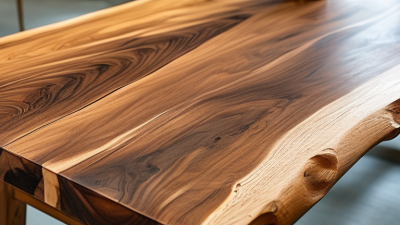
A high-quality solid oak table top begins with properly dried timber. In my experience, stable wood matters more than dramatic grain patterns. Ask about moisture control before judging appearance. Indoor oak commonly performs well near 6–10% moisture content, depending on the local climate. Excessively wet boards may shrink after installation. Very dry boards can react badly to humid air.

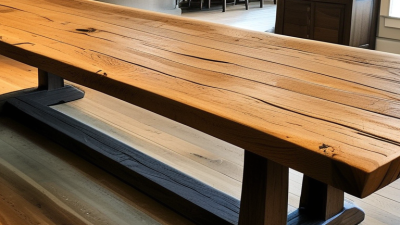
Look closely at the panel’s construction. Continuous staves create a traditional appearance, while narrower staves can reduce movement and waste. The joints should look tight, even, and carefully machined. A strong top usually has a practical thickness, often around 25–40 millimetres for dining use. Check the underside, too. Properly placed supports help limit warping without restricting natural movement.

Wood is never completely still.

Finish quality also reveals professional workmanship. Run your hand across the surface. It should feel smooth, without sharp edges, deep scratches, or uneven patches. A durable finish should protect the oak while preserving its natural texture. Ask whether maintenance requires oil, wax, or a protective coating. I once chose a beautiful top with a weak finish, and daily cleaning exposed the mistake quickly.

Reliable sellers should explain the timber’s origin, drying method, dimensions, tolerances, and care requirements. Independent grading or responsible forestry documentation can add confidence, but paperwork does not replace inspection. A small natural knot may be harmless. Large cracks, open joints, and twisting deserve closer attention. Looks can mislead.
How to Match Oak Table Tops With Your Space and Purpose

2026 How to Choose the Best Solid Oak Table Top?

Match the oak top to your room before judging its color. Measure the table zone, then leave about 36 inches for comfortable movement. This clearance follows common planning guidance from the National Kitchen & Bath Association. A narrow dining area needs a slimmer rectangle, while an open kitchen can support a wider top with rounded corners. In a small apartment, a 120-centimeter top may feel generous. In a large room, it may look strangely unfinished.

Purpose matters just as much. White oak has an oven-dry specific gravity of about 0.60, according to the USDA Forest Products Laboratory’s Wood Handbook. That density supports daily dining, writing, and moderate work. Still, solid wood moves with humidity. Do not press the top tightly against a wall or rigid frame. For a worktable, choose a thicker top and a low-sheen finish that hides small marks. For dining, softer edges feel kinder around children and busy chairs. I once chose a dark oak surface for a bright room. It looked elegant online, but it absorbed too much light. The choice was not perfect.

Tips: Place sample boards beside your floor and window. View them at morning and evening. Check grain direction before ordering. Leave expansion space. A beautiful top can still feel wrong when its scale, clearance, or maintenance needs conflict with everyday life.

2026 How to Choose the Best Solid Oak Table Top?

Recommended solid oak tabletop thickness by space and purpose

Thickness recommendations are based on common furniture construction practices. A 25 mm oak top suits compact desks and light-use tables, while 30–35 mm provides greater stability for dining, meeting, and home-office furniture. Heavy-duty workbenches and bar tops commonly benefit from 40–50 mm thickness, especially when the span is long or the top receives frequent impact.

Which Oak Grade, Thickness, and Finish Should You Choose?

Choosing the best solid oak tabletop starts with grade, not appearance alone. NHLA hardwood grading rules judge usable clear cuttings, not the table’s final strength or style. Select or FAS oak offers fewer knots and longer clean sections. Common-grade oak shows more character, including knots, mineral streaks, and uneven grain. I prefer it for relaxed dining rooms, but buyers should inspect filled knots carefully. They can loosen after seasonal movement.

Thickness depends on span, support, and visual proportion. A 25–30 mm top suits many four-seat tables with a strong apron or central supports. For longer spans, 35–40 mm can reduce visible flexing, though thickness alone cannot replace proper engineering. The USDA Forest Products Laboratory’s Wood Handbook, FPL-GTR-282, 2021, notes that interior wood commonly reaches about 6–8% moisture content in conditioned buildings. Ask for kiln-dried oak near that range. A beautiful top with unstable moisture is still a risk.

Tips: Choose a matte oil or hardwax finish when you want a natural touch-up surface. Choose a durable film finish for frequent spills and heavier use. The Wood Handbook also warns that finish performance depends on preparation, coating, and environment. Wipe spills quickly. Avoid placing hot cookware directly on the surface. I would not trust a vague “waterproof” claim without test details. Finish samples often look perfect under showroom lights, yet real kitchens are less forgiving. Check the underside, edge treatment, moisture reading, and support spacing before ordering.

How to Check Durability, Stability, and Sustainable Sourcing

2026 How to Choose the Best Solid Oak Table Top?

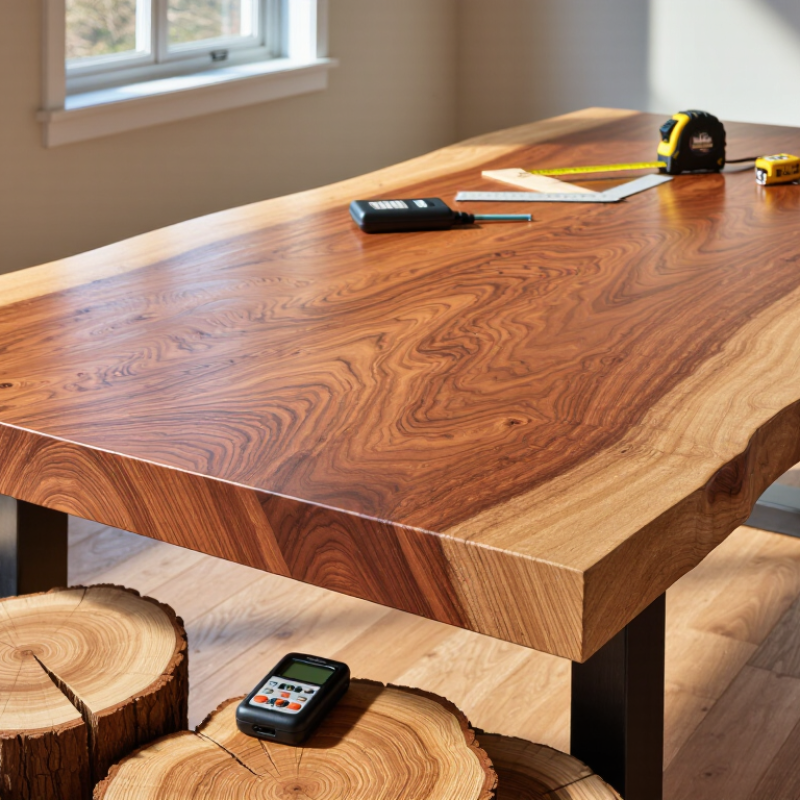
A durable oak table top should feel dense, even, and well-finished. I inspect the surface under angled light, where dents, open knots, and uneven sanding become obvious. Check the thickness, too. Thicker boards usually resist impact better, but thickness alone cannot prevent warping. Look for straight grain, tight joints, and carefully sealed edges. A moisture meter can reveal hidden risk. Indoor oak should usually have a moisture level suited to the room’s climate, not an arbitrary dry reading.

Stability depends on construction and installation. Solid wood expands across the grain as humidity changes. That movement is normal. It is not a defect. Ask whether the top uses stable edge-joined boards and proper fixing points. Screws should allow slight movement instead of locking the wood rigidly. Place a straightedge across the surface. A small uneven area may be acceptable, while visible cupping deserves caution. I once trusted a beautiful sample too quickly; the delivered panel behaved differently. Inspect the actual piece when possible.

Sustainable sourcing requires more than a green claim. Request the wood species, harvest region, and chain-of-custody documentation. Responsible suppliers should explain whether the oak comes from well-managed forests, reclaimed stock, or controlled sources. Check how workers, forests, and local ecosystems are considered. Certification can help, but it is not the only evidence. Ask practical questions. Vague answers are informative, too. Finish ingredients and packaging also matter, especially when low-emission options are available for indoor use.

How to Compare Prices and Select the Right Oak Table Top

How to Choose the Best Solid Oak Table Top in 2026

How to Compare Prices and Select the Right Oak Table Top

A low price does not always mean better value. Compare quotes using the same length, width, thickness, and edge profile. A 40-millimeter top naturally costs more than a 25-millimeter top. Ask whether the listed price includes sanding, finishing, packaging, and delivery.

Solid oak should have clear construction details. Check the oak’s grade, moisture level, panel width, and joint quality. Narrower joined panels may reduce movement and look more balanced. Wider panels can show stronger grain, but they may require careful installation. Request close-up photographs and a small sample when possible.

Look beyond the headline price. Shipping damage, unavailable finishes, or unclear return terms can create unexpected costs. A reliable supplier should explain wood movement and provide practical fitting guidance. Leave room for error. I once underestimated access through a narrow staircase, and the delivery plan had to change. Measure doors, lifts, and wall clearance before ordering.

A durable top needs a suitable finish for its use. Dining surfaces usually need stronger protection than occasional side tables. Compare finish types, maintenance instructions, and repair options. Do not judge quality by weight alone. Dense oak feels substantial, but accurate moisture control matters more for long-term stability. A slightly higher quote may be sensible when it includes verified materials, careful preparation, and dependable after-sales support.